
Our Blog

What is dentofacial orthopedics?

April 14th, 2017

You may have noticed that we specialize in orthodontics and dentofacial orthopedics. And while most people we talk to have heard of orthodontics, many are confused by the dentofacial orthopedics part of the title. Today, Dr. Allen Garai & Dr. Karen Tratensek and our team thought we would explain the difference.

While orthodontics entails the management of tooth movement, dentofacial orthopedics involves the guidance of facial growth and facial development, which occurs for the most part during childhood, and is a reason why kids are often the best candidates for receiving dentofacial orthopedic therapy. Dr. Allen Garai & Dr. Karen Tratensek will examine and monitor your child’s growth to determine when starting treatment will be most effective. If your child begins orthodontic treatment before his or her adult teeth have erupted, it is known as Phase-One treatment. During this phase, Dr. Allen Garai & Dr. Karen Tratensek will use treatments designed to correct your child’s jaw growth and make sure that the jaw bone is properly aligned before beginning the next phase of treatment, which usually involves placing braces to straighten your child's teeth.

Dentofacial orthopedics is also used to treat adult patients at Garai Orthodontic Specialist, however, this process may involve surgery. With our younger patients, we know the jaw bones are still forming, making it easier for our team at Garai Orthodontic Specialist to control bone growth and tooth movement. Adults, however, are a different story; their bones are no longer growing, and their jaw bones have hardened, so it is more difficult to adjust the bite and move teeth into proper alignment. Dr. Allen Garai & Dr. Karen Tratensek may recommend surgery to adjust the jaw bone and establish the proper bite alignment before beginning treatment.

Because our team at Garai Orthodontic Specialist is skilled in both areas, we are able to diagnose any misalignments in the teeth and jaw as well as the facial structure, and can devise a treatment plan that integrates both orthodontic and dentofacial orthopedic treatments.

We hope that helps! To learn more about dentofacial orthopedics, and to find out if this type of treatment is right for you, please contact our Vienna, VA & Great Falls VA office and schedule an initial consultation for you or your child. It’s never too late to get a great smile, and we can’t wait to help you or your child get started.

Foods that are Safe for Braces

April 7th, 2017

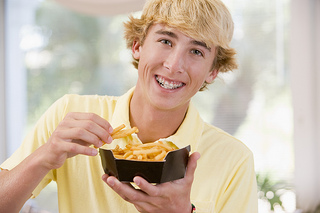
Orthodontic braces are used to straighten the teeth, which not only creates a more pleasing appearance, but also helps prevent tooth decay and other oral health problems. Braces are only effective when they are properly cared for, however. Certain foods, for example, are better suited for individuals who have braces, as opposed to hard and sticky foods that can cause damage. So, what types of foods should you or your kids eat to protect dental appliances?

The best foods to eat with braces are those that are not high in sugar and do not require excessive chewing. For breakfast, try eggs, yogurt, bacon, wheat toast, or oatmeal. Lunch may steer toward a banana rather than an apple, a salad without nuts, and a glass of water. If you are looking for some after-school snacks for your kids, consider baked tortilla chips with salsa and guacamole, or try string cheese with fruit.

A healthy dinner can include most types of vegetables, so long as they are cooked to an appropriate softness. Pair that with a lean protein, such as fish or chicken, and follow up with dessert. Just be sure to brush afterward!

Post-Tightening Foods

As braces begin to adjust the alignment of the teeth, our team at Garai Orthodontic Specialist will periodically tighten them to continue the alignment process. After tightening occurs, the teeth may be sore and sensitive to certain foods. During this time, it is best to eat soft foods. Examples include:

  • Pudding
  • Mashed potatoes
  • Soup
  • Ice cream
  • Cottage cheese
  • Peas
  • Pancakes
  • Pasta

Foods to Avoid

Anyone who wears braces – whether fixed or removable – should avoid excessive snacking and should aim to eat a healthy and balanced diet. It is also important to avoid foods that could cause damage to the braces, such as:

  • Hard candies
  • Gum
  • Nuts
  • Popcorn
  • Certain raw vegetables (for example, carrots)

Considerations

Regardless of what types of foods you eat with braces, it is important to keep the crevices between the teeth and around the braces very clean. That means brushing and flossing after meals to prevent the build-up of plaque and decay. Not only can failing to do so damage the teeth, but it can also cause discoloration.

Have more questions about orthodontic treatment? The Garai Orthodontic Specialist staff is always ready to answer all of your questions and help you get the most out of the treatment plan prescribed for you by Dr. Allen Garai & Dr. Karen Tratensek!

Tips to Avoid Common Problems Associated with Braces

March 31st, 2017

While braces play an important part in helping to create a healthy mouth and teeth, you might experience a few side effects while wearing them that are common and can be easily treated.

Even with the best of care, braces can cause soreness to your mouth. As your teeth begin to move, it is natural for your teeth to feel aches and your jaw to develop soreness.

If there are broken wires or loose bands on your braces, a sore tongue, mouth, or canker sore will occur. Canker sores are a common occurrence when braces rub inside the mouth. There are ointments available to reduce the pain and irritation associated with mouth sores. We urge those who experience a sore mouth or any of the following problems to call our office to schedule an appointment.

  • Loose brackets: Apply a small amount of orthodontic wax to the bracket temporarily. You might also apply a little between the braces and the soft tissue of your mouth.
  • Loose bands: These must be secured in place by your orthodontist. Try to save the band for repair.
  • Protruding or broken wires: The eraser end of a pencil can be used to move the wire carefully to a less painful spot. If you are unable to move it, apply orthodontic wax to the tip. If a mouth sore develops, rinse with warm salt water or antiseptic rinse.
  • Loose spacers: These will need to be repositioned and sometimes replaced.

Foods to Avoid

Some foods can also help or hurt you while you’re wearing braces. Remember to cut your food into small pieces that can be easily chewed. You will want to avoid hard and chewy foods that can break your hardware. Foods such as corn on the cob, nuts, carrots, apples, ice, and bubble gum should be avoided.

Braces, rubber bands, springs, and other mouth appliances associated with braces will normally attract food particles and plaque. Without the proper care, this could cause staining of your teeth.

Our staff at Garai Orthodontic Specialist recommends brushing after every meal or snack and carefully removing any food that might be lodged in the braces. A fluoride mouthwash might be helpful as well as flossing. At your next appointment, Dr. Allen Garai & Dr. Karen Tratensek can advise you how to floss with a brush specially designed for braces!

Five Braces-Friendly Dinner Recipes

March 24th, 2017

Did you know that more than four million children throughout the US and Canada have braces? At Garai Orthodontic Specialist, Dr. Allen Garai & Dr. Karen Tratensek and our staff know that kids can be picky and meticulous eaters. If cooking for children without braces is difficult, preparing meals for children with braces is especially daunting.

“Comfort food takes on a whole new meaning when cooking for children with braces,” says Pamela Waterman, author of The Braces Cookbook: Recipes You and Your Orthodontist Will Love. “Whether you have new brackets, elastics, headgear, or more, there are great foods you can eat; it just takes some thought.”

These five braces-friendly dinner recipes will be sure to keep your kids smiling!

  1. Macaroni and cheese is the ultimate comfort food. Pasta is soft, so it’s easy for children with braces to eat. The warm, gooey cheese melts in the mouth and doesn’t get stuck in the braces like hard or sticky foods. Chances are good that even the pickiest eater has a soft spot for this homespun classic.
  2. The key to braces-friendly cooking is to replace hard, crunchy foods with softer substitutes. In other words, burritos are a better option than tacos, and lasagna is a better choice than pizza. At the same time, if you have the culinary skills to whip up a pizza with a soft crust, you’re going to win the Best Mom (or Dad) of the Year award.
  3. Your child may not like fruits and vegetables. In fact, he or she may even try to convince you that with new braces, fruits and vegetables are off limits. Nice try, kids. While your child is wearing braces, prepare meals with cooked vegetables instead of raw vegetables. A vegetable stir-fry is a healthy and soft dinner choice for kids with braces.
  4. Whether it’s beef or chicken, meat is a good source of protein. However, meat, even when it’s carefully taken off the bone (kids with braces should never eat meat from a bone), can easily get caught in braces. Sloppy Joes are a good alternative. The beef is softened by the addition of the sauce and less likely to get strung in the wires and brackets of the braces. Serve the Sloppy Joes with a side of mashed potatoes.
  5. Ask any child and he or she will tell you that the best part of dinner is dessert. While hard candy, licorice, taffy, caramel, popcorn, and all other chewy candies should be avoided, ice cream and cake are braces-friendly treats that keep kids smiling.

Need more braces-friendly food ideas? Feel free to ask any member of our team.

Best OrthodontistWashingtonian Magazine
Top OrthodontistVirginia Living
Top OrthodontistConsumer's Research Council of America
Best OrthodontistFamilies Magazine
Top OrthodontistNOVA Living Magazine
Top OrthodontistNorthern Virginia Magazine
Top OrthodontistHealth and Beauty Magazine
Top OrthodontistWashington Consumer Checkbook Magazine
Back to top
Contact Us!
call email