Our Blog

The Intriguing History of Halloween

October 31st, 2014

Halloween is fast approaching, and Dr. Allen Garai & Dr. Karen Tratensek wanted to be sure to wish our patients a happy day, no matter how you might celebrate this holiday. The Halloween that is familiar to most people today bears little resemblance to the original Halloween; back in the "old days" it wasn't even called Halloween!

Festival of the Dead

Halloween started out as a Celtic festival of the dead that honored departed loved ones and signified a change in the cycle of the seasons. The Celtic people viewed Halloween, then called "Samhain," as a very special day – almost like our New Years day in fact, as their new calendar year began on November 1st. Samhain was the last day of autumn, so it was the time to harvest the last of the season's crops, store food away for winter, and situate livestock comfortably for the upcoming cold weather. The Celts believed that during this day, the last day of winter, the veil between this world and the spirit world is the thinnest, and that the living could communicate with departed loved ones most effectively on Samhain due to this.

Modern Halloween

Halloween as we know it today started because Christian missionaries were working to convert the Celtic people to Christianity. The Celts believed in religious concepts that were not supported by the Christian church, and these practices, which stemmed from Druidism, were perceived by the Christian church as being "devil worship" and dangerous.

When Pope Gregory the First instructed his missionaries to work at converting the Pagan people, he told them to try to incorporate some of the Pagan practices into Christian practices in a limited way. This meant that November 1st became "All Saints Day," which allowed Pagan people to still celebrate a beloved holiday without violating Christian beliefs.

Today, Halloween has evolved into a day devoted purely to fun, candy, and kids. What a change from its origins! We encourage all of our patients to have fun during the holiday, but be safe with the treats. Consider giving apples or fruit roll-ups to the kids instead of candy that is potentially damaging to the teeth and gums.

Remind kids to limit their candy and brush after eating it! Sweets can cause major tooth decay and aggrivate gum disease, so to avoid extra visits to our Vienna, VA & Great Falls VA office, make your Halloween a safe one!

A Helpful Site on Orthodontics

October 24th, 2014

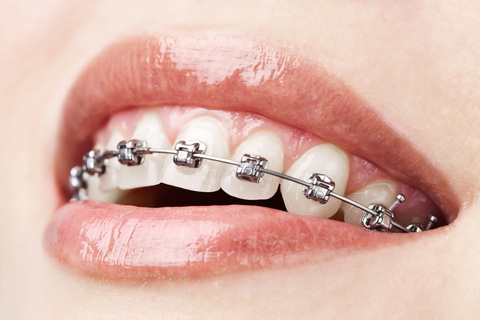
As you are undergoing orthodontic treatment, our team at Garai Orthodontic Specialist would like to point you to a helpful website. Our friends at the American Association of Orthodontists (AAO) have lots of important information about everything relating to braces, including myths and facts of orthodontics, tips for a better orthodontic experience, and cool webisodes about orthodontics.

Check out AAO today and feel free to contact us at our Vienna, VA & Great Falls VA office if you have any questions.

Dr. Allen Garai & Dr. Karen Tratensek and our team at Garai Orthodontic Specialist hope this information helps you!

What's the difference between an orthodontist and a dentist?

October 17th, 2014

Orthodontists and dentists both help patients improve their oral health, but in different ways. Dentistry is a broad medical specialty that deals with the teeth, gum, nerves, and jaw, while orthodontics is a specialty within dentistry that focuses on correcting bites, occlusion, and the straightness of teeth. One important difference is that all orthodontists like Dr. Allen Garai & Dr. Karen Tratensek are dentists, but not all dentists are licensed orthodontists.

How are they similar?

The main similarity between a dentist and orthodontist is that they both focus on oral care. An orthodontist can work in a dental office and provide the same care as a dentist. So in this respect, they are quite similar. They are both considered doctors, and deal with the teeth and gums.

How are they different?

There are more differences than similarities. An orthodontist requires additional schooling as a dental specialty; the situation is similar to a doctor who obtains additional schooling to become a surgeon. Another difference is that orthodontists specialize in helping patients with the alignment of their teeth, improving their bite, or fitting them for corrective braces and devices. If a patient has an overbite, a dentist will refer him or her to an orthodontist.

Dentists typically encourage good oral hygiene and provide services related to:

  • Tooth decay
  • Root canals
  • Gum disease
  • Crowns
  • Bridges
  • Veneers
  • Teeth whitening

Orthodontists are dentists that specialize in the alignment of teeth, and provide services related to:

  • Misaligned teeth
  • Crowded teeth
  • Overbite
  • Underbite

What an orthodontist can help with

Orthodontists help with crooked teeth, but they assist patients with other issues as well. These include overbites and underbites, crossbites, spaces between teeth, overcrowding of teeth, and the treatment of temporomandibular disorders (TMD). Additional problems with the jaw also need to be treated by an orthodontist.

While a dentist may be trained to provide orthodontic care in addition to extractions, TMJ treatments, and fillings, trusting your smile to an orthodontist can better balance the different procedures you require.

To learn more about the difference between dentists and orthodontists, or to schedule an initial consultation with Dr. Allen Garai & Dr. Karen Tratensek, please give our team at Garai Orthodontic Specialist a call at our convenient Vienna, VA & Great Falls VA office.

What is early intervention?

October 10th, 2014

Many developing orthodontic problems can be intercepted and corrected if diagnosed and treated at an early age. Dr. Allen Garai & Dr. Karen Tratensek and our team at Garai Orthodontic Specialist recommend children have their first orthodontic evaluation no later than age seven, or younger if the front four permanent teeth have replaced the baby teeth. Early treatment, also known as interceptive treatment or Phase I treatment, provides both timely detection of problems and greater opportunity for more effective treatment. Early intervention guides growth and development, preventing serious problems later.

If your child is showing these signs, it may be time to think about early orthodontic treatment:

  • Early or late loss of baby teeth (your child should typically start losing teeth around age five or six, and will have all their permanent teeth in around age 12 to 13)
  • Difficulty chewing and/or biting
  • Mouth breathing
  • Sucking his or her thumb
  • Speech impediment
  • Protruding teeth (the top teeth and the bottom teeth extend away from each other)
  • Crowded front teeth
  • Teeth that don't come together in a normal manner or even at all

Early intervention will greatly reduce the severity of your child’s case, and therefore reduce the length of treatment time and cost for a second phase of treatment when all of his or her permanent teeth have erupted. An evaluation at our Vienna, VA & Great Falls VA office will determine if your child’s dental and skeletal growth is proceeding properly or if interceptive treatment is needed. Many times, a more severe problem can be corrected using sophisticated removable appliances instead of traditional orthodontic treatment.

To schedule a consultation for your child to visit with Dr. Allen Garai & Dr. Karen Tratensek, please give us a call! We will provide your child with an initial exam, and discuss with you the best steps to take toward caring for your child's smile.

Best OrthodontistWashingtonian Magazine
Top OrthodontistVirginia Living
Top OrthodontistConsumer's Research Council of America
Best OrthodontistFamilies Magazine
Top OrthodontistNOVA Living Magazine
Top OrthodontistNorthern Virginia Magazine
Top OrthodontistHealth and Beauty Magazine
Top OrthodontistWashington Consumer Checkbook Magazine
Back to top
Contact Us!
call email