
Our Blog

When is the best time to floss?

May 29th, 2019
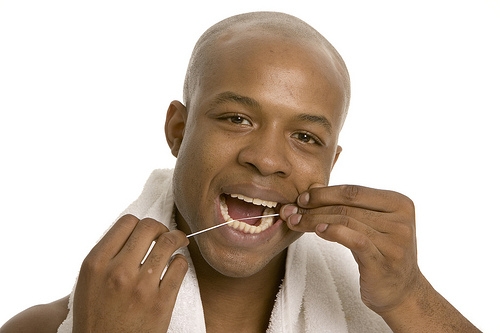
At Garai Orthodontic Specialist, we prefer our patients to practice good oral hygiene between office visits. Part of that process includes flossing, which Dr. Allen Garai & Dr. Karen Tratensek will tell you, is the process of cleaning between the teeth to remove food and debris from the areas that are hard to reach with a toothbrush. When food is allowed to remain between the teeth, it provides a breeding ground for bacteria, which can cause periodontal disease.

Should you floss before or after brushing?

You can floss either before or after brushing, according to your own preference. By flossing first, you can brush away dislodged food debris afterward. On the other hand, brushing first allows you to loosen plaque between the teeth, making it easier to floss more effectively.

Whichever you choose, the most important goal is to floss thoroughly. That means using a fresh strand of dental floss each day, and carefully pulling it back and forth between all of the teeth. Do not skip flossing because your teeth look or feel clean.

When to Floss

Unlike brushing, you need only floss between your teeth once per day. Although you may choose to do it in the morning or afternoon, many prefer to floss at night to prevent food and debris from remaining in the crevices of the teeth overnight. This could prevent the build-up of plaque too, which is a cause of tooth decay.

Help with Flossing

If you have questions about your flossing technique or what type of floss is best for your teeth, contact our office. Our staff will be more than happy to assist you in perfecting your home hygiene regimen. In most cases, you can choose between interdental cleaning picks or flexible floss strands to perform your daily flossing routine. If you have permanent oral appliances or restorations, be sure to follow the flossing instructions provided to you, and contact our Vienna, VA & Great Falls VA office with any questions.

Orthodontic Treatments

May 22nd, 2019

It’s not unusual for a patient to be unaware of the range of services that orthodontists can provide for their patients. Knowing which services Dr. Allen Garai & Dr. Karen Tratensek and our team perform can help you better understand your options and why we might select a particular method of treatment.

Both orthodontists and dentists care about good oral health, but they approach treatment in differing ways. You know that dentists clean teeth and treat gum disease, tooth decay, toothaches, and other oral health problems.

But what does your orthodontist do besides help straighten teeth with the help of braces? Orthodontists are commonly known to help fix or realign crooked teeth. Many of the patients at Garai Orthodontic Specialist come in for appointments that relate to their braces.

Dr. Allen Garai & Dr. Karen Tratensek and our team recommend that children be seen around the age of seven to evaluate their potential orthodontic needs. Common problems may include overcrowding of teeth, large gaps or spaces, and overbites or underbites, among other things.

In order to address these common problems, we offer several methods of treatment besides standard braces and retainers:

  • Space maintainers can be used to fill the spaces left by missing baby teeth so other teeth don’t shift and occupy the adult tooth’s location.
  • Jaw repositioning appliances, sometimes known as splints, are used to reposition the upper and lower jaw bones correctly.
  • Lip and cheek bumpers can also be used to avoid having to pull teeth. These bumpers are placed in the mouth so the patient’s lips or cheeks don’t put pressure on specific teeth.
  • A more common appliance that orthodontists use is expanders. If your mouth is crowded, expanders will be placed on the curve of the upper and/or lower jaw(s) in order to make room for teeth to be properly aligned.
  • As a last resort, an orthodontist may turn to headgear. This is normally provided to slow down the growth of the jaw. It must be worn a number of hours each day.

When you visit our Vienna, VA & Great Falls VA office, we will go over these options with you and pick the best course of treatment, depending on the current state of your oral health.

No matter which oral appliances you end up with, Dr. Allen Garai & Dr. Karen Tratensek and our team will go over all the available options with you to give you a beautiful smile. If you have questions regarding your treatment method, don’t hesitate to call our office and we can provide you with some insight.

Understanding the different options your orthodontist can provide should make matters less confusing if you should need to select a method of treatment.

To use or not to use mouthwash; that is the question

May 15th, 2019

A famous mouthwash company chose the marketing slogan, “Better than flossing.” As a consumer, would you believe a high-end commercial that essentially tells you to stop flossing? Just use this brand of mouthwash and the risk of gingivitis, cavities, etc., is gone. What a wonderful idea! Now for the reality: This is simply not true.

The company that made these claims received some negative feedback for making this false claim. Does this mean that all mouthwashes are ineffective? Absolutely not. It takes a little bit of research to know which mouthwashes are most effective and best suited for you. Here are some key points to remember when choosing a mouthwash.

First, think about why you want to use a mouthwash. If you are at high risk for cavities, you would benefit from a fluoride mouthwash. Check the labels to see which ones contain fluoride.

If you have active gingivitis, a mouthwash with some antibacterial properties would be preferable. Read the labels carefully. You do not want a mouthwash containing alcohol. If you have active periodontal disease, an antibacterial mouthwash is appropriate, though you may want to discuss which kind would be best for your individual needs.

Prescription mouthwashes are also an option. You should pay close attention to the directions, such as how much and how long to use them. There is one brand in particular whose effectiveness can steadily diminish if you use it continually. There can also be side effects you should discuss with our office and/or your pharmacist.

Some great mouthwashes for kids change the color of plaque on their teeth to help them see how they are doing with their brushing. This is a great learning tool for the child and the parent! Why not pick up a bottle for yourself next time you’re at the store and evaluate your own performance?

Beware of claims that a mouthwash can loosen plaque. This is not accurate. Beware of any mouthwash that has alcohol. This is worth mentioning twice. Take care of your taste buds. If you are using a strong mouthwash, it can reduce your sense of taste.

These tips should help you choose the right mouthwash for your needs. Please contact Dr. Allen Garai & Dr. Karen Tratensek at our Vienna, VA & Great Falls VA office with any specific questions!

How Does AcceleDent® Make Orthodontic Treatment More Efficient?

May 8th, 2019

Good things come to those who wait. And a beautiful, healthy smile is something worth waiting for! But if there were some way to make the orthodontic process work more quickly, that would be even better. If making your orthodontic treatment more efficient is something that might interest you, talk to us when you visit our Vienna, VA & Great Falls VA office, and we’ll explain how you might be able to shorten your time in braces or aligners by using AcceleDent.

How Does Orthodontic Treatment Move Your Teeth?

Our bone cells are really doing a lot of the work! Normally, the bone tissue in our jaws holds our teeth in place very securely. As pressure is put on the teeth through braces or aligners, two things happen: tissue on one side of the tooth stretches, and tissue on the other side of the tooth compresses. Our bones react to these gradual changes by creating more bone cells where the stretching occurs, and maintaining fewer on the other side. Eventually, the bone around our teeth will reshape to create an even, attractive smile and to firmly maintain the teeth in their new positions.

How Can AcceleDent Speed Up this Process?

AcceleDent is an orthodontic device designed to increase the activity of the cells that are remodeling the bone surrounding each tooth. The AcceleDent appliance provides gentle and precise vibrations with a patented process called SoftPulseTechnology®.  When you activate the appliance, these vibrations, called micropulses, travel through the roots of the teeth into the surrounding bone. The micropulses stimulate cellular activity in the bones, leading to a faster remodeling of the bone structure and faster tooth movement.

To make things even easier for you, the third generation of AcceleDent technology, the AcceleDent Optima™, can be linked to the AcceleDent App. You can monitor your progress on the dashboard, discover motivational tools, and even share connections with family, friends and your treatment team.

If you are interested in making your best smile happen—and happen more quickly— talk to Dr. Allen Garai & Dr. Karen Tratensek about how much time AcceleDent might save in your personal treatment plan. Good things come to those who wait, but a good thing that comes a bit sooner than expected? Even better!

Best OrthodontistWashingtonian Magazine
Top OrthodontistVirginia Living
Top OrthodontistConsumer's Research Council of America
Best OrthodontistFamilies Magazine
Top OrthodontistNOVA Living Magazine
Top OrthodontistNorthern Virginia Magazine
Top OrthodontistHealth and Beauty Magazine
Top OrthodontistWashington Consumer Checkbook Magazine
Back to top
Contact Us!
call email